

 Hezhu Impression
 2019-04-29
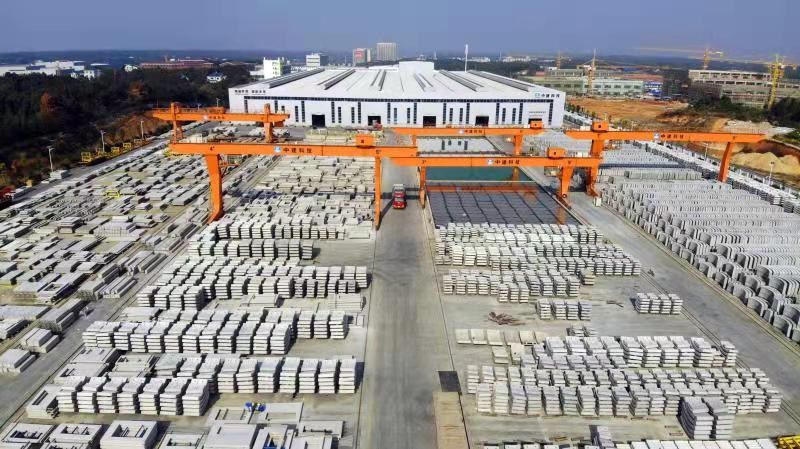
With the continuous development of the national economy, the construction industry has also experienced vigorous growth. At present, China has increased its emphasis and improvement on environmental protection, and the traditional construction industry has begun to shift towards industrialized construction methods. Many PC factories have sprung up in various parts of the country. According to incomplete statistics, as of the end of 2018, the total number of PC factories in China exceeded 1000, but the overall production capacity of each factory still cannot meet market demand.
 policy requirements
At present, the governments of 31 provinces, cities, and autonomous regions across the country have issued policy documents to strongly support and encourage the development of the prefabricated construction industry. In Beijing, Tianjin, Shanghai, and other places, the prefabricated assembly rate has been required to reach over 50% of the national standard; The prefabrication assembly rate in other regions also requires a range of 15% to 30% or more, resulting in a huge gap in PC factories nationwide.
Design bottleneck
Due to the gradual improvement of the public's living standards, people's personalized needs for architecture are also increasing. Combined with the fierce competition among various real estate enterprises, the types of building layouts are constantly changing, and products cannot be standardized. In addition, due to the vast territory and complex geographical location of our country, and considering various factors such as earthquake zones, it is difficult to achieve standardized design in the short term.
market demand
According to research, there are about 22 PC factory projects that have been built or are under construction in Tianjin (excluding customers who have signed contracts and are under construction), among which large factories such as Tianjin Housing Group, Yuanda Housing and Construction, Yuanda Xingchen, Beijing Housing and Construction Group are representative. More than 70% of the components in Tianjin and more than 30% in Beijing are provided by a few factories, and the production capacity is seriously insufficient.
From the perspective of industry development, the current number of factories in Tianjin still cannot meet market demand. According to the data from the Tianjin Municipal Bureau of Statistics, in 2017, the construction area of houses in Tianjin was 167.3618 million square meters, including 64.1218 million square meters of residential construction area; the completion area of houses was 39.0791 million square meters, including 14.7188 million square meters of residential completion area. By 2020, the planned proportion of prefabricated buildings in new construction area in Tianjin will reach more than 30%. According to the linear relationship between Tianjin's GDP growth rate and the completion area of houses, the completion area of prefabricated buildings is predicted to be about 12.15 million square meters. Based on the proportion of reinforced concrete structures being 80% and the prefabrication rate being 30%, with a requirement of 0.35 cubic meters of reinforced concrete per square meter, it is estimated that approximately 1.02 million cubic meters of PC components will be needed annually by 2020
Current situation of the factory
The difficulty in implementing standardized design directly affects the overall production capacity of PC factories. PC production lines cannot achieve automated production, and the low production efficiency caused by the combination of manual and mechanized production methods hinders the guarantee and improvement of production capacity. However, the large area of land and high capital investment required for building a PC factory have resulted in a long return on investment cycle for investors, making it difficult for the factory to operate.
Difficulties in building a factory
Due to the decreasing land area in various regions and the strengthening of land management measures by governments, the large area of land required for the construction of PC factories has become the first bottleneck in the entire project construction process. Secondly, despite the exponential growth of the prefabricated construction industry, there are difficulties in approving environmental impact assessment procedures for equipment and facilities such as mixing plants and boilers, as well as various approval procedures.
Long return cycle
Taking the uneven prices of PC components in various regional markets as an example, a standardized 150 acre PC factory requires a construction investment of 150 million yuan, with an actual annual production of 40000 cubic meters. Taking the current market price in Tianjin as a reference price of 3500 yuan/cubic meter for high priced regions, the annual output value is 140 million yuan, with a gross profit margin of 42 million yuan at 30% and a net profit of 25.2 million yuan at 60% of the gross profit; It will take at least 6 years to recoup the entire investment. Therefore, although the current production capacity of PC factories cannot meet market demand, most customers still choose to maintain a wait-and-see attitude.
The dilemma of concrete enterprises
From on-site mixing at the beginning, to the issuance of the "Ninth Five Year Ban", raw materials such as sand, cement, stones, and additives were mixed in pre mixed factories to produce commercial concrete and sent to construction sites. This has evolved into today's concrete bonding molds, molds, and required auxiliary materials, which are processed into PC components and transported to construction sites for installation. All of these have witnessed the progress and development of China's construction industry.
Affected by a national investment of 4 trillion yuan in 2011, the industry experienced severe capacity expansion, leading to a continuous deterioration of overcapacity in the industry since 2012, reaching a historical low of 22.96% by the end of 2015. Although there was a slight increase in 2016, overcapacity still had a significant impact on the industry.
Due to overcapacity, market competition has intensified, sales prices have decreased, profit margins have shrunk, financing sales have risen, accounts receivable are difficult, profitability has declined, and many other problems have occurred. Most enterprises are facing the dual pressure of losses and inability to transform. At the same time, environmental requirements are becoming increasingly high and rigorous, and the concrete industry is facing a huge survival test. It urgently needs to transform and upgrade, and urgently seeks new development opportunities.
Nowadays, after several years of rapid development, prefabricated buildings have gradually replaced traditional construction methods. The increase in prefabrication ratio will inevitably reduce the market share of ready mixed concrete, which will directly impact concrete enterprises and the ready mixed concrete market.
Development opportunities for concrete enterprises
In fact, after experiencing a long river of development in the construction industry, it is not difficult to see that the most advantageous group for engaging in the prefabricated construction industry should be concrete enterprises. Because concrete enterprises have accumulated a large amount of technical, operational, management, and cost reduction experience in the past 30 years, they have unique advantages in engaging in the prefabricated construction industry.
As a comprehensive solution provider that pioneered the innovative factory+integrated service model in the industrial industry, Hezhu Impression can help concrete enterprises achieve upgrading and development in their own industries, increase their service scope and profit growth points, and save them from the difficulties of transformation and development. This approach will also become the best choice for concrete enterprises to achieve sustainable development.