

 Hezhu Runneng
 2021-11-22
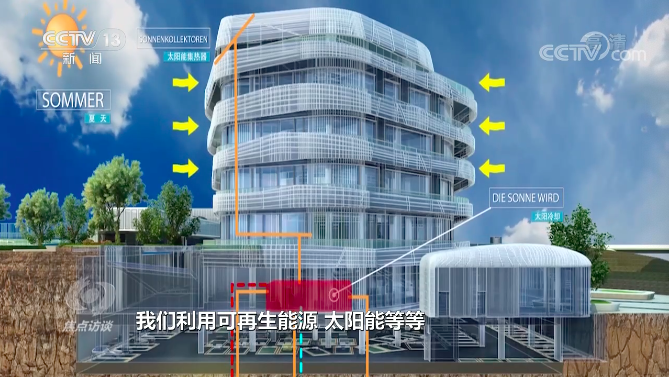
In the September episode of CCTV's "Focus Interview" program, a special program about "ultra-low energy consumption, green buildings" was broadcasted. Therefore, how to create ultra-low energy green buildings under emission reduction targets has become an important issue.
Multiple favorable policies that benefit photovoltaic projects
With the popularization of the concept of ultra-low energy buildings, photovoltaics have become one of the most promising ways to reduce emissions in buildings, and photovoltaic buildings have also received a lot of favor and policy support.
In early June, the Ministry of Housing and Urban Rural Development and 15 other departments issued the "Opinions on Strengthening Green and Low Carbon Construction in County Towns", which clearly stated that the proportion of rooftop photovoltaics in buildings should be increased, and the application of distributed photovoltaics and intelligent photovoltaics should be promoted.
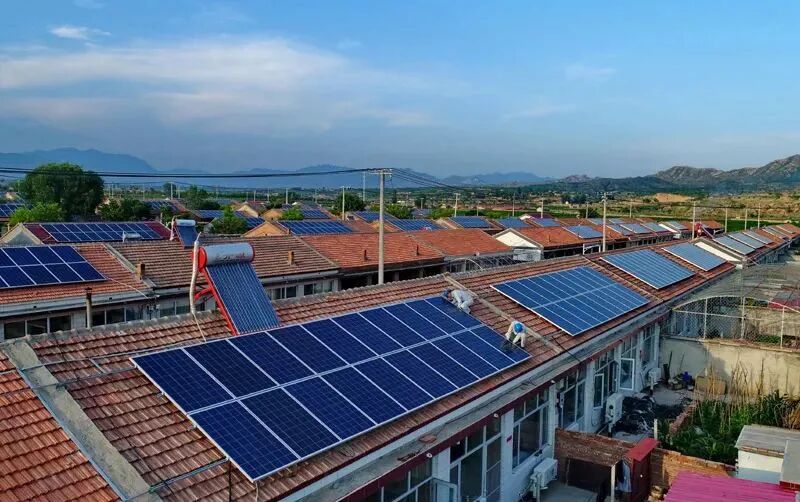
In the same month, the National Energy Administration issued the "County wide Promotion" policy, which also clearly stipulated the proportion of photovoltaic installations that should be installed on the roofs of various building types, and the total installation proportion should not be less than 50%. As of now, 25 provinces across the country have submitted pilot plans for about 500 counties. If calculated based on a scale of 200MW per county, only 500 counties will add distributed photovoltaic installed capacity or exceed 100GW.
It is not difficult to see that both the national government and various ministries and local governments are actively promoting the development of photovoltaic buildings. Especially the unprecedented participation enthusiasm of photovoltaic enterprises is igniting the popularity of the "photovoltaic building" market. The integration of photovoltaics and buildings will undoubtedly become an important direction for the future development of industrial integration.
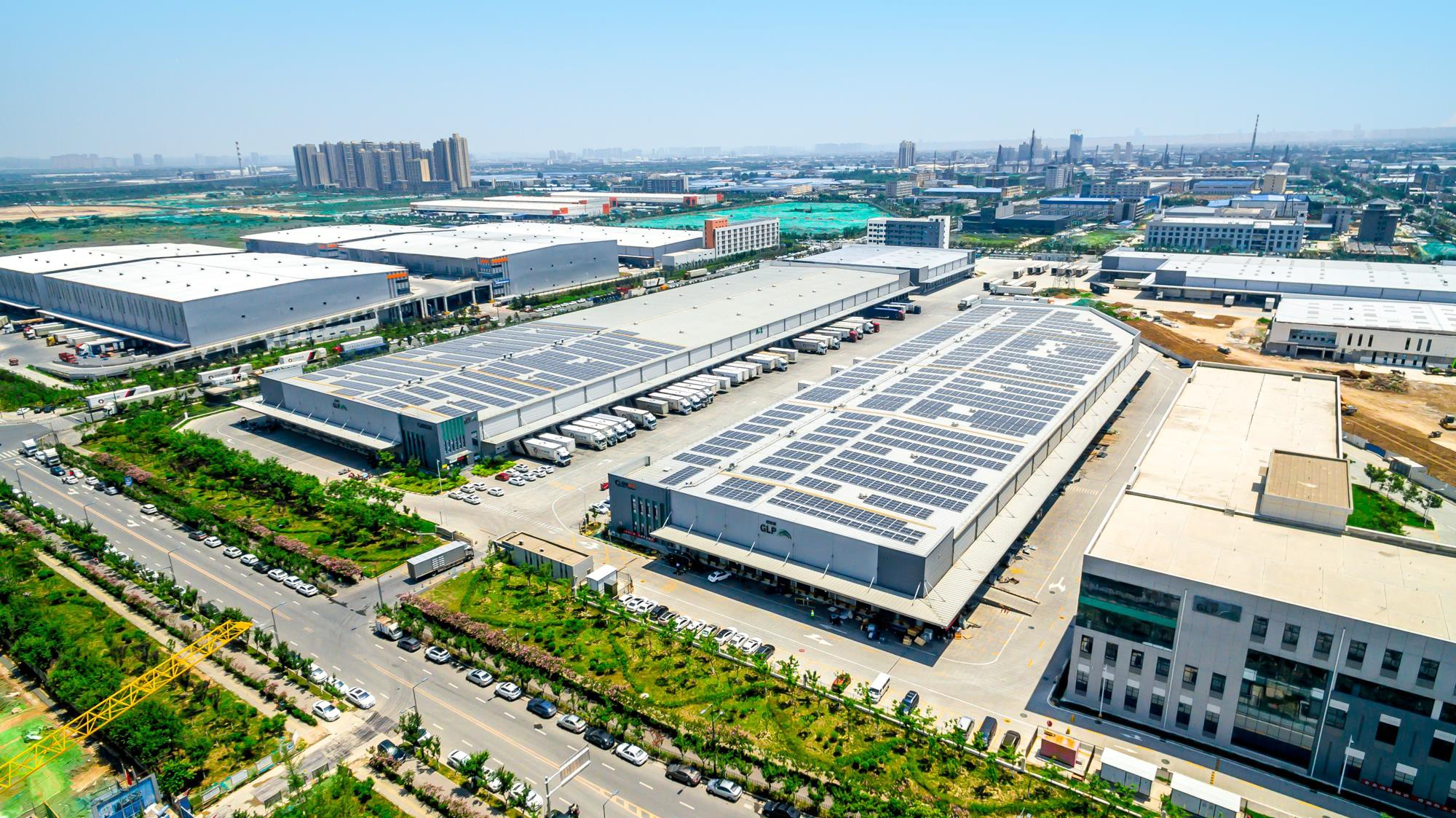
By installing photovoltaic products on the facades and roofs of buildings, photovoltaics can transform buildings from "energy consumers" to "energy producers". The deep integration of architecture and photovoltaics has also accelerated the emergence of a new market for the integrated development of photovoltaic buildings. Taking advantage of the trend, Hezhu has taken the lead in promoting the construction of PC factory roof distributed photovoltaic projects in the construction industrialization industry by combining the thinking of industrial integration with multiple well-known photovoltaic enterprises in the new energy field. For different factory situations, HeZhu can provide two construction schemes: BIPV (Building Integrated Photovoltaics) and BAPV (Building Integrated Photovoltaics). It is recommended to use BIPV for the construction of new factories, which can achieve synchronous design, construction, and installation, achieving a perfect integration of buildings and photovoltaics. It is recommended to use BAPV method for the renovation of old factories, which means installing photovoltaic power generation systems on the original buildings without conflicting with the functions of the buildings themselves, and without damaging or weakening the functions of the original buildings. So both BIPV and BAPV can ensure that buildings meet aesthetic needs in terms of appearance, color, and shape, while also meeting the needs of photovoltaic power generation and building energy conservation and emission reduction, completely changing the nature of buildings.
Therefore, whether guided by the "dual carbon" goal or supported by various policies, the development of building photovoltaics has already stepped onto the trend of "green building" development, gradually moving towards large-scale commercialization and industrial application, becoming the killer move to achieve a "zero carbon world".
What is the significance of controlling and reducing building energy consumption in achieving emission reduction targets?
According to the Global Building Alliance's "2020 State of the World Building Report," carbon emissions from the global building sector have reached their highest level to date. In 2019, the global construction sector (including the construction industry) accounted for 38% of the total global carbon emissions; According to data from the China Building Energy Efficiency Association, the energy consumption of the entire building process accounts for over 51% of the country's total carbon emissions. Faced with such a huge proportion of carbon emissions, controlling and reducing building carbon emissions is also the most important way to achieve emission reduction goals.
How can photovoltaics help achieve energy conservation and emission reduction in the construction industry?
The carbon emissions during the entire construction process are mainly divided into two main parts: the production process of building materials and the operation of the building. Taking China as an example, building energy consumption accounts for over 51% of the country's total carbon emissions, with 28% of the carbon emissions from building materials and 22% from building operation stages. In terms of building materials, photovoltaic power stations can be built to replace traditional fossil energy electricity, using more green electricity to intervene in building materials production and reduce energy consumption in the building materials production process; During the building operation phase, we can integrate or install distributed photovoltaic and energy storage facilities in the building to supply photovoltaic power to the building, thereby reducing carbon emissions during the building operation phase; Therefore, photovoltaic power generation can effectively reduce building energy consumption from the two main carbon emitting links of building materials production and construction operation.
Why has the integrated development of photovoltaics and buildings become an inevitable trend in reducing building emissions?
Firstly, the rapid decrease in the cost of photovoltaic power generation has provided an economic foundation for it to become the main source of electricity; Secondly, there is a huge space for the integration of buildings and photovoltaics. Currently, China has a building area of over 60 billion square meters, which can install about 780GW of distributed photovoltaic products; Annual increase in building area of over 2 billion square meters, capable of installing distributed photovoltaic products of over 26GW; Thirdly, in the process of integrating buildings with photovoltaics, the development of building photovoltaics has the characteristics of higher integration, better building properties, more convenient installation, and longer service life; Photovoltaic building integration is a more advanced distributed photovoltaic technology; Therefore, taking into account factors such as overall economy, market space, and technological iteration, the development of photovoltaic buildings in a unified manner will make photovoltaic power generation the basic function of buildings. This is also an inevitable trend for future building emissions reduction.