

 HeZhu Impression
 2026-07-16
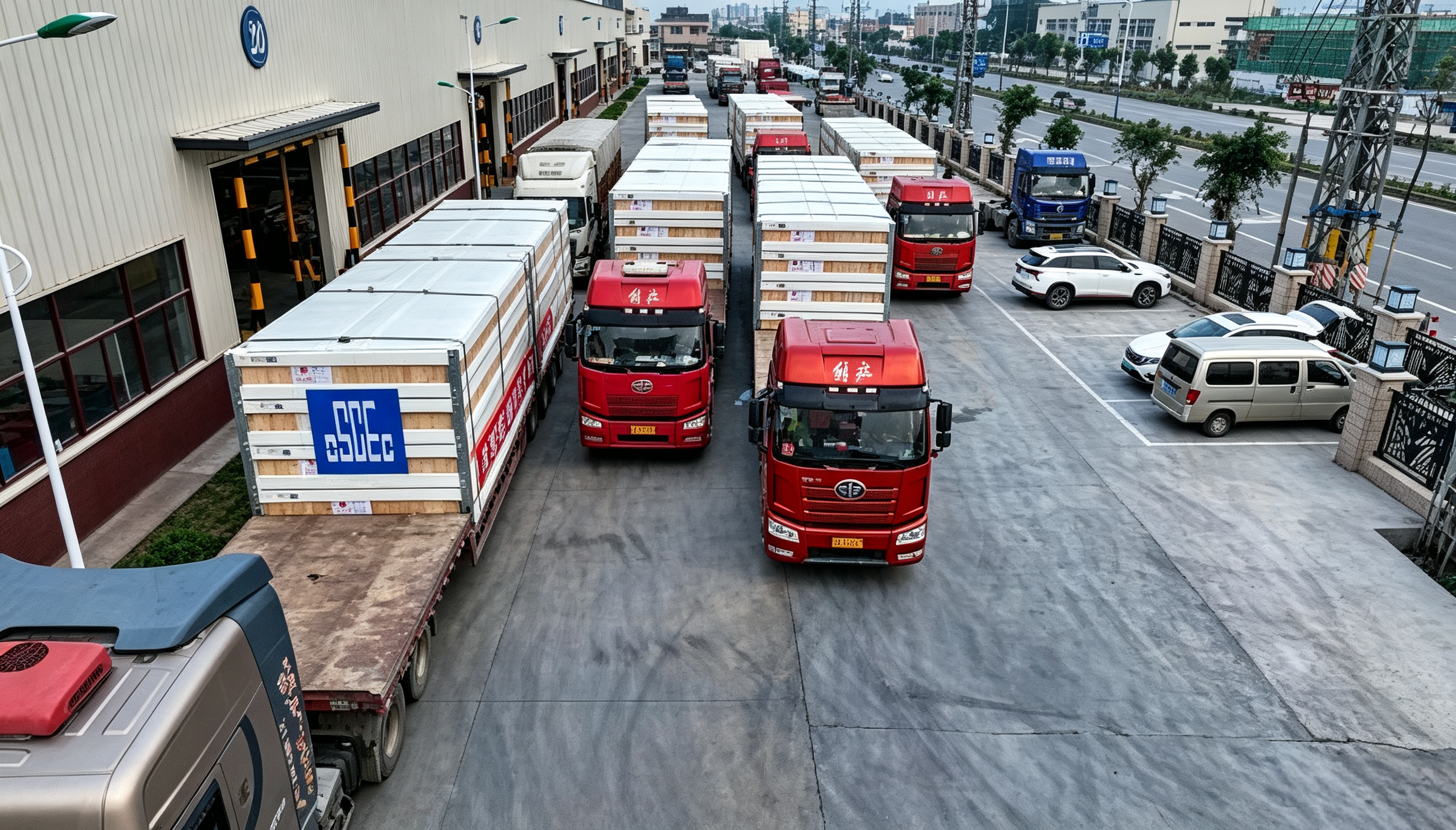
In 2026, China's export of "prefabricated houses" is emerging as a bright spot in the foreign trade sector. According to General Administration of Customs data, in the first half of the year alone, China's total exports of prefabricated construction reached $2.79 billion, up 45% year-on-year; from January to April, Shenzhen port exported "mobile houses" worth 1.68 billion yuan, a year-on-year increase of 19.6%, with products sold to more than 150 countries and regions worldwide. Amid this wave of "construction going global," light steel and light concrete (light steel–light concrete) products have become the most eye-catching stars in overseas markets.
Advantage 1: Turning an uncontrollable construction site into a controllable factory
The core logic of light steel and light concrete products is to completely transform the traditional "sequential construction" on-site building process into a "parallel operation" factory manufacturing process. In the factory, light steel keel frames, wall panels, piping, and even fine decoration can be prefabricated simultaneously, with precision controlled to the millimeter level. Once shipped to the overseas site, assembly and hoisting are as simple as building with blocks, reducing on-site labor by up to 70% and shortening the overall construction period by more than one-third.
This efficiency advantage is particularly prominent in overseas projects. In Indonesia, Zhongxiang Intelligent Construction used a thin-walled light steel modular system to shorten a dormitory construction project—traditionally requiring two years—to just six months, while reducing costs by 30%. In Papua New Guinea, CSCEC Steel Structure built a hotel using 84 "module boxes," delivering the entire project in just seven months, compared to the 14 to 18 months required for traditional cast-in-place construction.
Advantage 2: Not competing on low price, but on a comprehensive "cost-saving + hassle-saving" equation
Overseas clients choose Chinese light steel and light concrete products not merely because they are cheap, but because they have calculated the total cost benefits. In developed markets like Australia, local residential construction costs have risen more than 30% over the past six years, coupled with a severe labor shortage. Chinese SIPs prefabricated houses have an ex-factory price of about RMB 4,000 per square meter; even after shipping and tariffs, the total cost is still about 30% lower than traditional local construction, and the frame for a 100-square-meter unit can be erected in just two to three days.
In developing regions like Southeast Asia, where local construction industry chains are underdeveloped and skilled workers are scarce, traditional construction often drags on for one to two years. Using China's exported light steel systems, the entire process from production to completion takes only two to three months, perfectly matching developers' need for rapid capital turnover. What overseas owners truly value is the full-chain delivery capability of Chinese solutions—high efficiency, high integration, and high cost-performance.
Advantage 3: Green and low-carbon, meeting the global "carbon neutrality" imperative
The "green genes" of light steel and light concrete buildings are becoming their "passport" to high-end markets. A "light steel integrated prefabricated near-zero energy building" project launched in Changzhou, Jiangsu, features a four-dimensional closed-loop carbon-reduction system—"lightweight structure, photovoltaic self-generation, high material recyclability, and energy-saving water circulation"—which can reduce construction-phase carbon emissions by 30% and operational-phase energy consumption by 30%. The project has been selected as a Ministry of Industry and Information Technology international cooperation model case and has been applied in markets such as Cuba.
In markets like Europe and the United States, where carbon emissions are subject to mandatory regulations, the full-lifecycle low-carbon advantage of modular buildings has become a bidding differentiator. A Shandong-based company, targeting the frequent wildfire hazards in North America, exports light steel integrated houses made entirely of Class A non-combustible materials, precisely addressing a market safety necessity, and simultaneously secured major orders from Canada and the United States.
From "product export" to "standard export"
The boom in light steel and light concrete buildings is not a fleeting market trend, but a concentrated manifestation of China's full industrial chain advantages. From design adaptation and intelligent production to ocean logistics and on-site installation, China has developed the world's most complete building industrialization system.
However, the path overseas is not without challenges. Differentiated building standard certifications across countries—such as EU CE and US ICC—are key bottlenecks, requiring product localization adaptation on a "one-country, one-strategy" basis. Leading companies have already initiated strategic upgrades. Zhongxiang Intelligent Construction has laid out a clear "three-step" roadmap—from "riding the tide" to "sailing independently," with the ultimate goal of establishing overseas factories, achieving a deep leap from "product export" to "capacity export."
Turning houses into "giant express parcels" and shipping them globally is not only a revolution in construction methods, but also a profound empowerment of the global construction industry by China's industrialization and digitalization capabilities. Driven by both green low-carbon imperatives and efficient delivery, the "breakout" story of light steel and light concrete buildings has only just begun.